
Stop Training Like You Have One Speed: Energy Systems Explained
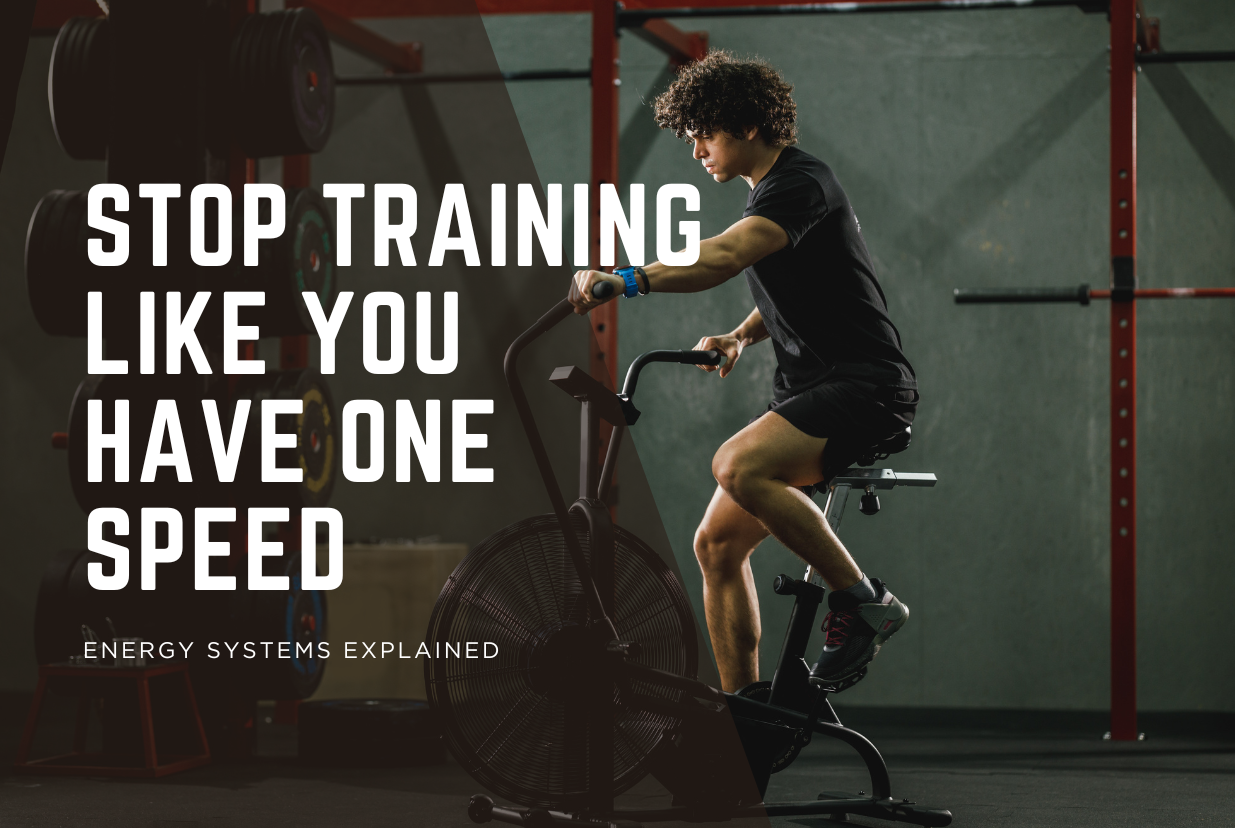
You know that person at your gym who does everything at maximum intensity? Sprints through their warmup, crushes themselves during squats, then immediately jumps into a burpee-heavy metcon and wonders why they feel like garbage after 30 seconds?
That’s what happens when you don’t understand how your body actually produces energy.
Meanwhile, the person next to them is systematically working through different intensities, looking fresh throughout their entire workout, and somehow getting better results with what appears to be less effort.
The difference? They understand that your body has three distinct energy systems, each designed for specific types of work. And mixing them randomly isn’t training smart. It’s training yourself into the ground.
The Problem: Everyone Trains Like They Have Two Settings
Walk into any gym and you’ll see the same mistake repeated endlessly: people treating their body like it only has two settings: barely moving and completely redlined.
They either cruise through their warmup sets at 20% effort or attack every single exercise like it’s a one-minute all-out sprint. There’s no in between. No strategy. No understanding that different intensities serve different purposes.
It’s like watching someone drive across the country using only first gear and fifth gear. Sure, you’ll eventually get there, but you’re going to burn out your engine in the process.
Here’s what they don’t understand: your body operates on a spectrum of intensities, each designed for specific types of work. Each intensity targets different energy systems, creates different adaptations, and requires different recovery strategies.
Mixing them randomly isn’t smart training. It’s a recipe for burnout.
The Three Energy Systems
Your body has three distinct ways of producing energy, each suited to different intensities and durations of work.
Energy System 1: ATP-PC (Your Sprint Speed)
This is your body’s top-end explosive system. It provides immediate energy for maximum intensity efforts lasting 10 to 15 seconds before it fatigues.
The ATP-PC system uses stored adenosine triphosphate (ATP) and phosphocreatine (PC) already in your muscles. No oxygen required. No lactate buildup. Just pure, immediate power.
You’re using this system when:
- Sprinting 10 to 50 meters at maximum speed
- Performing 1 to 3 rep max lifts
- Explosive jumps or throws
- Short bike or rowing sprints (10 to 15 seconds)
- Heavy medicine ball slams
Key characteristics:
- Immediate energy production with no delay
- No oxygen required
- No lactate production, so no burning sensation
- Burns out quickly and completely
How to train it properly: Maximum effort with complete recovery. For ATP-PC work, the rest ratio is 1:10 to 1:12. That means for every second of work, you need 10 to 12 seconds of recovery.
Example: 8 x 15 second bike sprints with 2.5 to 3 minutes complete rest between efforts.
What most people do wrong: They don’t rest long enough between efforts, turning ATP-PC training into glycolytic torture that defeats the purpose entirely.
Energy System 2: Glycolytic (Your High Intensity Gear)
This is your sustained high-speed setting. It kicks in when your efforts last from roughly 15 seconds up to 2 minutes at high intensity.
The glycolytic system breaks down stored carbohydrates (glycogen) without needing oxygen, which allows you to maintain high power output. The tradeoff is lactate buildup, which creates that burning sensation and eventual fatigue.
Maximum capacity from this system is achieved when you work at an intensity greater than your maximum oxygen uptake for as long as possible, which for most trained athletes is between 2 to 3 minutes.
You’re using this system during:
- 200 to 800 meter runs at high intensity
- Barbell complexes lasting 60 to 90 seconds
- High rep lifting sets (15 to 25 reps)
- Sustained bodyweight circuits
- Those brutal one-minute burpee tests
Key characteristics:
- Doesn’t require oxygen (anaerobic)
- Produces lactate as a byproduct (the burn you feel)
- Can sustain high power output for 1 to 2 minutes
- Creates significant fatigue
How to train it properly: Embrace the discomfort. Work at intensities that create lactate buildup with incomplete recovery that keeps the system under stress.
Example: 5 x 90 second bike intervals at 85 to 90% effort with 90 seconds active recovery.
What most people do wrong: They either go too easy (turning it into aerobic work) or too hard (burning out after 30 seconds and missing the glycolytic training zone entirely).
Energy System 3: Aerobic (Your Cruise Control)
This is your sustainable pace setting. The aerobic system is the primary source of energy for activities lasting longer than 2 minutes, using oxygen to burn carbohydrates, fats, and sometimes proteins.
You’re using this system during:
- Steady runs, bikes, or rows lasting 20 plus minutes
- Zone 2 heart rate training
- Long, paced workouts
- Recovery between high intensity efforts
- Most of your daily activities
Key characteristics:
- Requires oxygen to function
- Can use multiple fuel sources (carbs, fats, proteins)
- Sustainable for hours when paced properly
- Supports recovery of the other two systems
How to train it properly: The aerobic system can be trained at multiple intensities, each serving a different purpose.
Easy aerobic work sits around 70 to 75% maximum heart rate. This should feel conversational. You could talk in full sentences without gasping. This builds your aerobic base and supports recovery.
Higher intensity aerobic work sits closer to your lactate threshold, around 80 to 90% max heart rate. At this intensity, breathing becomes strong but controlled, and you can only speak in short phrases. This is where you build sustainable speed and raise your aerobic ceiling.
Example: 40 minute steady bike ride at 70 to 75% max heart rate for base building, or 4 x 6 minute intervals at threshold intensity with 90 seconds recovery for capacity development.
What most people do wrong: They go too hard during easy sessions, turning aerobic recovery work into glycolytic suffering. Or they avoid structured aerobic work entirely because it doesn’t feel hard enough, missing out on massive conditioning benefits.
For a complete breakdown of aerobic training, including VO2 max, threshold, sub-threshold, and tempo work, check out our Complete Guide to Running Training. It covers everything you need to know about developing your aerobic system systematically.
The Reality: All Systems Work Together
Here’s where most fitness advice gets it wrong: these systems don’t operate in isolation. They work simultaneously to meet energy demands, but one always dominates depending on the intensity and duration of work.
Think of it as a sliding scale:
- 0 to 15 seconds: ATP-PC dominates (roughly 95%), others contribute minimally
- 15 seconds to 2 minutes: Glycolytic dominates (roughly 70%), ATP-PC and aerobic support
- 2 plus minutes: Aerobic dominates (roughly 85%), others provide power for surges
The same exercise can train different systems depending on how you execute it:
- 5 minute row as an all-out sprint: Primarily glycolytic (and you’ll die halfway through)
- 5 minute row at steady pace: Primarily aerobic (sustainable and repeatable)
- 15 second rowing sprints with full rest: Primarily ATP-PC (explosive power)
Why Most People’s Training Is Backwards
The biggest mistake is trying to train all systems simultaneously in every workout.
You see this everywhere:
- CrossFit workouts that start with heavy lifting, then immediately jump into high intensity circuits
- HIIT classes that never allow full recovery, so they’re really just glycolytic punishment
- People who think every workout needs to leave them gasping on the floor
The problem with this approach:
- You can’t develop any system optimally when you’re randomly mixing intensities
- You accumulate fatigue faster than you can recover from it
- You miss the specific adaptations each system provides when trained properly
- You burn out mentally and physically from constant high-intensity chaos
Where Energy Systems Matter Most
Here’s the truth: energy systems matter dramatically for some types of training and barely at all for others.
Where energy systems are critical:
Functional fitness and CrossFit: Energy system development is absolutely essential. These workouts constantly mix time domains and intensities. Understanding when you’re training power (ATP-PC), when you’re building work capacity (glycolytic), and when you’re developing an aerobic base determines whether you improve or just get really good at suffering.
Sports performance: Every sport has specific energy system demands. A 100 meter sprinter needs massive ATP-PC power. A 400 meter runner lives in the glycolytic pain cave. A marathon runner is all about aerobic efficiency. Train the wrong system and you’re preparing for the wrong sport.
General fitness and health: If your goal is to feel good, move well, and live long, energy system balance matters enormously. Most people need more aerobic base work and less random high-intensity chaos.
Conditioning work: This is literally energy system training. Whether you’re improving VO2 max, lactate threshold, or recovery capacity, you’re targeting specific energy pathways.
Where energy systems matter less:
Pure hypertrophy and bodybuilding: If you’re trying to get jacked, energy systems are secondary. You care about mechanical tension, training volume, and proximity to failure. Whether your bicep curls are powered by ATP-PC or glycolytic energy is irrelevant to muscle growth. The only consideration is allowing enough rest between sets to maintain training quality.
Pure strength training: Powerlifters and strength athletes care about moving maximum weight for 1 to 3 reps. This is almost exclusively ATP-PC work, but the focus is on neuromuscular adaptation, not energy system development. Rest periods are determined by strength recovery (3 to 5 minutes), not energy system training goals.
The Smart Approach: Train Systems Systematically
For training that involves mixed time domains and intensities, structure your approach to develop each system with purpose instead of random intensity mixing.
For general fitness and longevity:
- 70% Aerobic: 3 to 4 sessions focused on steady, sustainable effort
- 20% Glycolytic: 1 to 2 sessions with sustained high-intensity intervals
- 10% ATP-PC: 1 session with explosive, fully recovered efforts
For athletic performance, adjust percentages based on sport demands while maintaining the systematic approach rather than random mixing.
Sample Weekly Structure
Monday: ATP-PC Development
- 8 x 15 second bike sprints
- 3 minute complete rest between efforts
- Total time: 30 minutes
Tuesday: Aerobic Base
- 40 minute steady rowing at conversational pace
- 70 to 75% max heart rate
Wednesday: Glycolytic Power
- 6 x 90 second high-intensity intervals
- 90 second active recovery between efforts
Thursday: Aerobic Recovery
- 30 minute easy movement
- Walking, light cycling, or yoga
Friday: Mixed Glycolytic and Aerobic
- 5 x (15 second sprint + 45 second moderate + 60 second easy)
- Teaches system transitions
If you want a complete structured approach to aerobic development specifically, FLEX Endurance includes three weekly sessions with progressive running and machine work that systematically builds all levels of aerobic capacity at the right intensities.
The Three Critical Questions
Before any workout, ask yourself:
- What energy system am I trying to develop?
- What intensity and duration will target that system?
- What rest periods will support that goal?
If you can’t answer these questions, you’re probably training randomly.
Stop Doing This
- Random intensity mixing within workouts
- Going hard on every single training day
- Incomplete rest during power and speed work
- Pushing aerobic sessions into the glycolytic zone
Start Doing This
- Plan each session with a primary energy system focus
- Use appropriate intensities and rest periods for your goal
- Include true recovery sessions that stay aerobic
- Track your pacing to ensure you’re hitting the right zones
The Bottom Line
Your body has three distinct energy systems that have evolved over millions of years to handle different types of physical demands. Each system has optimal training methods, recovery needs, and adaptation timelines.
Trying to train all of them simultaneously in every workout isn’t functional or intense. It’s just ignorant.
The athletes and lifters who understand energy systems train with purpose. They know when to go hard, when to go easy, and when to go explosive. They develop each system systematically rather than randomly.
The result? Better performance, faster recovery, and sustainable progress over years rather than burnout over months.
Your choice: keep training like you have one engine and wonder why you’re always tired, or start training like you understand how energy actually works and watch your performance take off.
The science has been clear for decades. The only question is whether you’re ready to train smarter instead of just harder.