How to Prepare for the Murph Workout: 6 Week Program + Scaling Guide
Every Memorial Day, thousands of people attempt the Murph workout to honor Navy SEAL Lieutenant Michael P. Murphy. And every year, a lot of those people can barely move for the rest of the week because they jumped in without any preparation.
The workout: a 1 mile run, 100 pull-ups, 200 push-ups, 300 air squats, and another 1 mile run.
It sounds manageable until you’re 40 pull-ups in and your arms stop working.
This guide gives you a basic 6 week prep program you can run alongside your normal training, plus scaling options for every fitness level. The program is simple on purpose. It is designed for someone who already trains but has never done Murph or anything close to it.
Why You Should Not Just Show Up and Do Murph
This is not about being tough enough. A 2024 systematic review in Apunts Sports Medicine looked at 63 cases of people hospitalized with rhabdomyolysis (severe muscle breakdown that can damage your kidneys) from high intensity workouts. Nearly two thirds of those cases involved the upper body and arms. The researchers pointed to high repetition push-ups and pull-ups as a likely cause, especially when the volume was unfamiliar.
A separate case documented in the Federal Practitioner described three female trainees hospitalized after a single session of 125 push-ups and 85 assisted pull-ups. All three were in excellent physical health beforehand. All three needed IV fluids and week-long hospital stays. Murph prescribes 200 push-ups and 100 pull-ups. That is more total upper body volume than the session that put those trainees in the hospital.
The good news: your body has a built-in protection mechanism. Researchers call it the repeated bout effect. Once your muscles have been exposed to a movement at moderate volume, they adapt and become significantly more resistant to damage from higher volume later. Even a few low volume sessions weeks in advance provide real protection.
That is the entire logic behind this program. Expose your body to the movements progressively so that by Memorial Day, your muscles have already adapted to the demands.
Before You Start
This is a general program. Your running ability, pull-up strength, and bodyweight movement capacity are specific to you, and it would be impossible for us to know your starting point.
The program assumes you can run a mile without stopping and can do at least a few strict pull-ups or a scaled version like banded pull-ups or ring rows. If you cannot run a mile yet, build that first. If pull-ups are completely new to you, spend 3 to 4 weeks on banded pull-ups or ring rows before starting Week 1.
Adjust rest times and scale movements based on where you actually are, not where the program says you should be.
The 6 Week Program
Two days per week. Day 1 is strength (pull-ups, push-ups, squats). Day 2 is running. Add these alongside your existing training.
Each strength session uses the same round format you will use on Murph day, so you are practicing both the movements and the pacing strategy at the same time.
Week 1
Day 1: Strength
4 Rounds
5 Pull-Ups
10 Push-Ups
15 Air Squats
Rest 2 minutes between rounds
Totals: 20 Pull-Ups, 40 Push-Ups, 60 Air Squats
Day 2: Running
Run 1 mile at a conversational pace. Note your time.
Week 2
Day 1: Strength
5 Rounds
5 Pull-Ups
10 Push-Ups
15 Air Squats
Rest 90 seconds between rounds
Totals: 25 Pull-Ups, 50 Push-Ups, 75 Air Squats
Day 2: Running
Run 1 mile
4 x 400m
60 seconds rest between intervals
Week 3
Day 1: Strength
6 Rounds
6 Pull-Ups
12 Push-Ups
18 Air Squats
Rest 90 seconds between rounds
Totals: 36 Pull-Ups, 72 Push-Ups, 108 Air Squats
Day 2: Running
Run 1.5 miles continuous
Week 4: Benchmark Test
Day 1: Half Murph (For Time)
Run 800m
50 Pull-Ups
100 Push-Ups
150 Air Squats
Run 800m
Partition the middle section however you want. Time the whole thing.
This is your dress rehearsal and your data point. If anything feels like it is falling apart, you know what to focus on in Weeks 5 and 6.
Day 2: Running
4 x 400m at a hard effort
90 seconds rest between intervals
Week 5: Peak
Day 1: Strength
8 Rounds
8 Pull-Ups
15 Push-Ups
20 Air Squats
Rest 60 to 90 seconds between rounds
Totals: 64 Pull-Ups, 120 Push-Ups, 160 Air Squats
This is the highest volume session in the program. It is supposed to be hard. If you need to break a round in half, that is fine.
Day 2: Running
Run 2 miles continuous
Week 6: Taper
Day 1: Strength (Monday or Tuesday)
4 Rounds
5 Pull-Ups
10 Push-Ups
15 Air Squats
Rest as needed
Light and easy. You are keeping the movements in your system, not building fitness this week.
Day 2: Running (Wednesday)
Run 1 mile at an easy pace
Rest Thursday through Sunday. Memorial Day is Monday. Trust the preparation.
One note about the base this program assumes. Six weeks is enough time to sharpen for Murph. It is not enough time to build general fitness from zero. The people who walk away from Murph feeling strong are the ones who train consistently the other 46 weeks of the year. That is what the FLEX Program is for: year round strength and conditioning that keeps you ready, so event prep like this becomes a six week sharpening block instead of a rescue mission.
Volume Progression at a Glance
| Week | Pull-Ups | Push-Ups | Squats | Running |
|---|---|---|---|---|
| 1 | 20 | 40 | 60 | 1 mile |
| 2 | 25 | 50 | 75 | 1 mi + intervals |
| 3 | 36 | 72 | 108 | 1.5 miles |
| 4 | 50 TEST | 100 TEST | 150 TEST | 800m + intervals |
| 5 | 64 | 120 | 160 | 2 miles |
| 6 | 20 TAPER | 40 TAPER | 60 TAPER | 1 mile easy |
Scaling the Prep Program
If you cannot do strict pull-ups yet, pick one option and use it for the entire 6 weeks:
Banded pull-ups
Jumping pull-ups
Ring rows
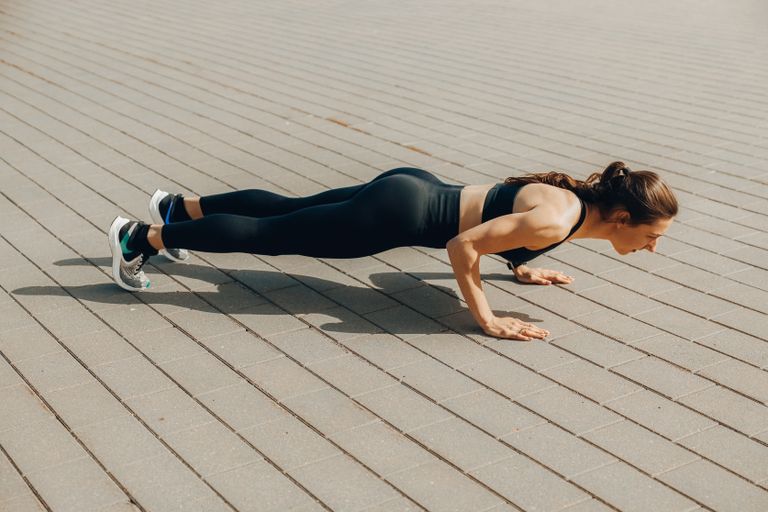
If push-ups break down before you finish a round, switch to incline push-ups (hands on a bench or step). This keeps the same body position as a regular push-up and lets you finish the volume without falling apart.
Use the same scaled version consistently. Your body builds the protective adaptation through the same movement pattern. Switching variations every session slows that process down.
Scaling Options for Murph Day
Half Murph
Run 800m
50 Pull-Ups
100 Push-Ups
150 Air Squats
Run 800m
Reduced Volume Murph
Run 1 mile
50 Pull-Ups
100 Push-Ups
150 Air Squats
Run 1 mile
Bodyweight Only (No Pull-Up Bar)
Run 1 mile
100 Ring Rows or Seated Band Pull-Downs
200 Push-Ups (incline if needed)
300 Air Squats
Run 1 mile
Walking Murph
Replace both runs with a 1 mile walk. Reduce reps by 50% if needed.
Partner Murph
Split all reps evenly. One person works while the other rests.
Movement Substitutions
| Prescribed | Option 1 | Option 2 | Option 3 |
|---|---|---|---|
| Pull-Ups | Banded Pull-Ups | Jumping Pull-Ups | Ring Rows |
| Push-Ups | Incline Push-Ups | Knee Push-Ups | DB Floor Press |
| Air Squats | Partial Range Squats | Box Squats | Wall Sit Intervals |
| 1 Mile Run | 800m Run | 1 Mile Walk | 2km Row or Bike |
How to Partition Murph
Partitioning means breaking the middle section into repeating rounds instead of doing all 100 pull-ups, then all 200 push-ups, then all 300 squats straight through.
Standard Partition (Recommended)
20 Rounds
5 Pull-Ups
10 Push-Ups
15 Air Squats
This is the same format you trained with in the prep program. Nothing new on game day.
Push-Up Split Partition
20 Rounds
5 Pull-Ups
5 Push-Ups
15 Air Squats
5 Push-Ups
Breaks the push-ups into two smaller sets and gives your chest a rest during the squats. For most people, push-ups are the movement that slows down the most. This helps.
Larger Sets (Experienced Athletes Only)
10 Rounds
10 Pull-Ups
20 Push-Ups
30 Air Squats
Only attempt this if you can comfortably do 15+ unbroken pull-ups and 30+ unbroken push-ups when fresh.
Pacing Strategies
There are two ways to approach the pace on Murph day. Pick one before you start.
Negative Split
Start at a controlled effort (RPE 5 to 6, about a 5 or 6 out of 10). Move through the first 5 to 8 rounds at a pace that feels almost too easy. Gradually increase your intensity as you go. The goal is to finish faster than you started. This is the safer strategy for first timers because it prevents the early burnout that kills most people’s second half.
Consistent Pace
Find a sustainable round time and hold it for all 20 rounds. Time your first round, then try to match it every round after. If your first round takes 90 seconds, every round should take roughly 90 seconds. This works well if you tested your pacing during the Week 4 Half Murph and know what you can sustain.
Both strategies assume you are partitioning. If you attempt Murph unpartitioned, pacing becomes about managing individual movement sets and is significantly harder to control.
Game Day Tips
Start the first mile at a pace you could hold a conversation at. If you go out too fast, you pay for it on the pull-ups.
Pick your partition strategy before you start and commit to it. Do not change mid-workout.
Pace the pull-ups conservatively in the first 10 rounds. Most people hit a wall around rep 60 to 70. Burning out early makes every round after that significantly slower.
If you are doing high volume pull-ups, use grips or chalk. Ripped hands mid-workout will shut you down faster than fatigue will.
Hydrate in the days before Murph, not just the morning of. Dehydration is an independent risk factor for muscle damage and it compounds the effect of high volume training.
If you followed this program, your body has already adapted to these movements at serious volume. Trust that and focus on steady pacing over raw speed.
Know the Warning Signs
Normal post-Murph soreness peaks around 24 to 48 hours and gradually improves. See a doctor if you experience any of the following:
- Extreme swelling in the arms that does not go down
- Dark brown or cola colored urine
- Inability to straighten or bend your arms past a certain point
- Severe pain getting worse instead of better after 48 hours
These are signs of rhabdomyolysis. Most cases are caught early and treated with IV fluids. Do not wait it out.
The Murph workout is performed every Memorial Day in honor of Navy SEAL Lieutenant Michael P. Murphy, who was killed in action in Afghanistan on June 28, 2005. Regardless of the version or scaling option you choose, the purpose is to honor those who served.