Hip Extension vs Back Extension: Why the Name Matters More Than You Think
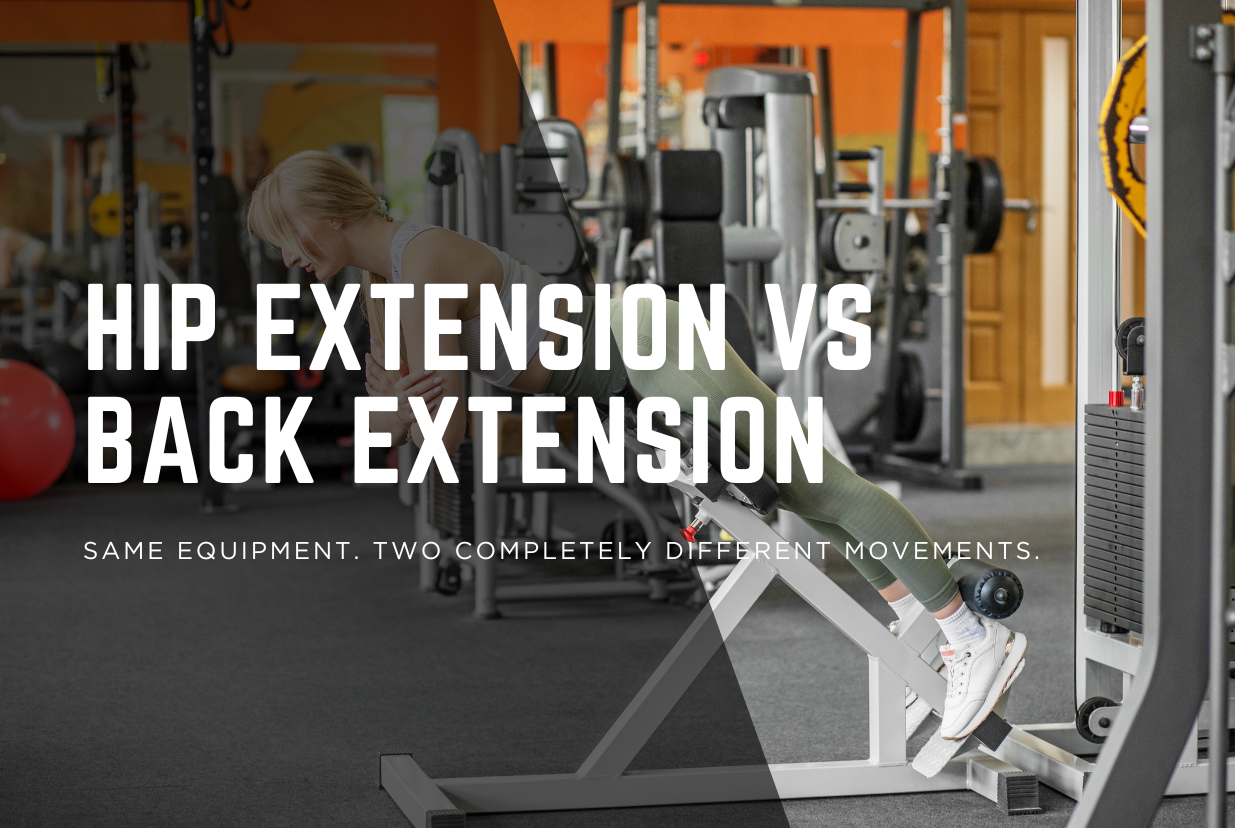
Whenever I program a movement on the GHD or Roman chair in FLEX or any of my programs, I call it what it actually is: hip extension. Not “back extension.” Not “hyperextension.” Hip extension.
This isn’t me being pedantic. The name “back extension” has created two decades of confusion about what muscle should be working, what joint should be moving, and why your lower back feels like it got run over by a truck when you were supposedly “strengthening” it.
Let me clear this up once and for all.
The Problem With “Back Extension”
Here’s what happens when someone sees “back extensions” programmed:
They think the target is their lower back. They hunt for that “deep lower back pump” by cranking into lumbar flexion at the bottom and snapping into an aggressive arch at the top. They add weight because “stronger back equals healthy back, right?” Then they wonder why their back feels like garbage.
The issue is simple: the name tells people the wrong story. When you hear “back extension,” you assume your spine should be extending. But in most cases, when coaches program this movement correctly, your spine should be doing almost nothing. Your hips should be doing everything.
Have you fallen victim to this? Reply in the comments below. Have you been calling these “back extensions” and wondering why your lower back always feels trashed? Or maybe you’ve been doing them right all along but couldn’t figure out why everyone else seemed confused. Let me know.
What Hip Extension Actually Is
Hip extension is when your torso moves relative to your legs by rotating around the hip joint, or when your leg moves behind your body. Think about an RDL or a good morning. Your spine stays locked in position while your hips hinge and extend. The primary engines are your glutes and hamstrings. Your lower back muscles work isometrically to keep your spine stable and stiff, not to curl up and down.
This same pattern is what you’re doing when you set up properly on a Roman chair or GHD. The pad sits just below your hip crease. You fold at the hips on the way down, keeping your torso rigid as one piece. You extend at the hips on the way up by driving your glutes and hamstrings, pushing your hips into the pad. Your spine moves very little.
It’s a hip hinge in a different orientation. Same family as RDLs, good mornings, hip thrusts, glute bridges, cable pull-throughs, and kettlebell swings. All of these live in the hip extension category because the joint that’s moving is the hip, not the spine.
What True Back Extension Actually Is (And Why It Matters)
Real spinal extension is a completely different movement. The spine itself flexes and extends. Your vertebrae move relative to each other. The spinal erectors, multifidus, and other deep back muscles shorten and lengthen through range. Your hips don’t change angle much.
You see true spinal extension in movements like Jefferson curls, cat-cow, segmental Roman chair work where you deliberately round and unround your spine, and McKenzie press-ups.
And here’s what’s important: true back extension training is valuable. You absolutely should be training spinal flexion and extension as part of your overall movement practice and athletic development. The ability to control your spine through its natural range of motion matters for real-life performance, injury resilience, and athletic capacity. I’m not dismissing this work. It’s important.
The catch is this: for the vast majority of people, that work should be done with light loads or just bodyweight. Think cat-cows, bodyweight Jefferson curls, segmental mobility work, controlled spinal waves. This isn’t about loading it heavy. It’s about building tolerance, control, and capacity through the spine’s natural movement patterns.
The Easiest Test: Which One Are You Actually Doing?
On a Roman chair or GHD, here’s how to know:
- If your chest is lifting you up → You’re doing a back extension (spinal movement)
- If your hips are lifting you up → You’re doing a hip extension (hip hinge)
Another simple check:
- Feel it deep in your lower back? → You’re doing it wrong
- Feel it in glutes and hamstrings? → You’re doing it right
These are two completely different training goals that have been living under the same confusing name for decades. Both patterns can be done on the same equipment. To someone watching, they might look similar. Biomechanically, they’re completely different exercises with different goals, different risks, and different outcomes.
Why I Program Hip Extension as the Default
It’s safer for more people. Hip extension gives you the strength and hypertrophy benefits with a much wider safety margin. You can load it heavier, progress it more aggressively, and the risk-reward ratio is far better. True spinal extension work requires more screening, more coaching, and more caution, especially for anyone with a history of back issues, spinal stenosis, or extension-sensitive pain patterns.
It builds what actually matters for strength. Most people who think they need to “strengthen their lower back” actually need stronger hips and better trunk endurance. Hip extension work delivers both. You get glute and hamstring strength that transfers to every other lift and real-life movement. Your spinal erectors still work hard as stabilizers, which is exactly what they need to do in every compound lift you’ll ever perform.
Your spine is going to move a little anyway, and that’s fine. Research shows that even when lifters try to maintain a “neutral” spine during squats, deadlifts, and hinge movements, the lumbar spine still moves through some flexion and extension. That’s normal. You’re not a statue. The goal isn’t to freeze your spine completely. The goal is to avoid slamming into end-range positions under load while keeping the movement driven by your hips, not your spine.
How to Actually Do Hip Extensions
This is where most people go wrong, and it’s where the right cues fix everything.
Set up as a hip hinge, not a chest lift. The pad should sit just under your hip crease so you can actually pivot at the hip. Start with your body in one long line from head to heel, ribs stacked over your pelvis, with a mild brace through your trunk.
The range of motion is probably less than you think. Your ROM is limited by your hamstring flexibility, not by how low you can drop your torso. For most people, that means a lot less range than they’re trying to use. When you hit the end of your hamstring stretch, stop. If you push past that point, your lower back will start flexing to make up the difference, and you’ve just turned a hip extension into the exact spinal flexion problem we’re trying to avoid.
The cue that fixes everything: Don’t lift your chest. Instead, lift yourself by squeezing your glutes and hamstrings. Think about pushing your hips into the pad as you come up, not throwing your chest up toward the sky. Feel the stretch in your hamstrings on the way down. Feel your glutes firing on the way up.
Upper back rounding is fine, sometimes helpful. If keeping a slight round in your upper back helps you avoid arching aggressively through your lower back, do it. You’re not turning this into a lumbar flexion exercise as long as your lumbar region stays set and stable.
Red flags to watch for: If you feel this exercise only in your lower back and nowhere in your glutes or hamstrings, something is off. If you’re diving into end-range flexion at the bottom or snapping into an aggressive arch at the top, you’ve turned a hip extension into a bad spinal extension rep. Stop moving your chest. Freeze your trunk. Let your hips do the work.
When Back Extension Actually Makes Sense
True spinal flexion and extension training has its place. It builds spinal resilience, movement capacity, and helps you stay mobile and functional. You should be doing some form of this work.
But it should be:
- Light load or bodyweight
- Controlled and deliberate
- Separate from your hip extension strength work
Think cat-cows, light Jefferson curls, segmental spinal waves, or mobility-focused work. Not heavy loaded spinal motion on equipment designed for hip hinge strength.
When we program hip extensions in Fitness Academy or FLEX, that’s not what we’re asking you to train. We’re asking you to build hip strength and posterior chain capacity with a stable spine. The spinal mobility work happens separately.
Unless you’re an extremely experienced lifter who knows exactly what you’re doing and why, keep hip extension exercises for hip extension, and keep spinal mobility work light, controlled, and separate.
Alternatives and Substitutions
If you don’t have a Roman chair or GHD, the same hip extension pattern can be trained with:
- RDLs (barbell, dumbbell, single leg)
- Good mornings
- Cable pull-throughs
- Hip thrusts and glute bridges
- Kettlebell swings, hard style (once you own the hinge pattern and want dynamic stimulus)
All of these are hip extension. All of these hit glutes and hamstrings. All of these build the same movement pattern.
The Bottom Line
When you see “hip extension” programmed on the GHD or Roman chair in my programs, you now know exactly what I mean. Move from your hips. Keep your spine stable. Feel your glutes and hamstrings working, not your lower back joints grinding through excessive range of motion.
The confusion around “back extensions” isn’t your fault. The name has been misleading people for decades. But now you know the difference, and you know what to look for.
Hip extension is the default for building strength and resilience. True back extension is valuable and should be trained, just not with the same exercises, and not with heavy loads for most people.
Program it right. Cue it right. Your back and your hips will thank you.