Pull-Up Alternatives: Substitutions That Maintain the Training Stimulus
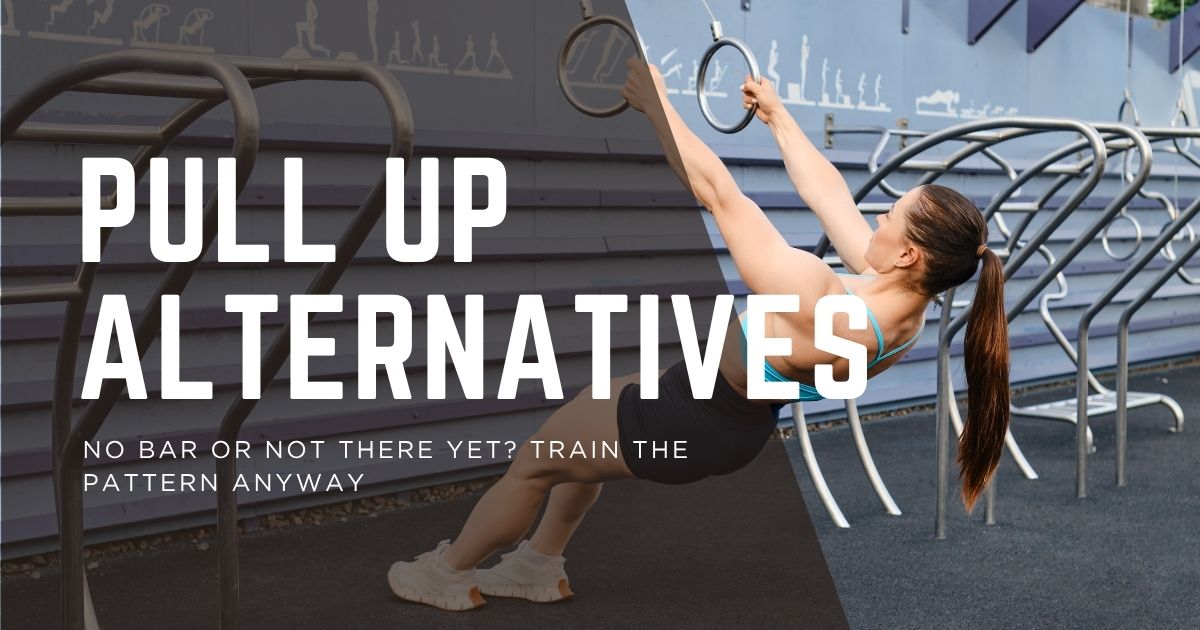
Pull-ups show up in almost every serious program, and they are the exercise people most often quietly skip. No bar at home. Not strong enough yet for a strict rep. A shoulder that complains overhead.
Whatever the reason, skipping the pattern entirely is the real mistake. These alternatives keep the vertical pulling stimulus with equipment you actually have, and they build toward the strict pull-up instead of around it.
Understanding What Pull-Ups Train
Before substituting, understand what you’re replacing. Pull-ups primarily train the latissimus dorsi, biceps, rear deltoids, and lower trapezius through a vertical pulling pattern. The movement also demands significant grip strength and scapular control.
Any quality substitute should load these same muscle groups through a similar range of motion. The closer the alternative matches the pull-up’s movement pattern, the better the transfer when you eventually return to pull-ups.
For Building Toward Your First Pull-Up
Band-Assisted Pull-Ups
Loop a resistance band over the pull-up bar and place your foot or knee in the band. The band provides the most assistance at the bottom (where you’re weakest) and the least at the top, matching the pull-up’s natural strength curve.
Start with a thick band and progress to thinner bands as strength improves. When the thinnest band feels easy for sets of 8-10, test an unassisted pull-up.
Limitation: Bands don’t provide consistent resistance. The assistance varies dramatically through the range. This makes them useful for practicing the pattern but less precise for progressive overload.
Eccentric (Negative) Pull-Ups
Jump or step to the top position with your chin over the bar. Lower yourself as slowly as possible, aiming for 5-8 seconds. Reset and repeat.
This is the single most effective method for building pull-up strength if you can’t yet do a full rep. The eccentric phase loads the same muscles through the same range, and muscles can handle roughly 20-40% more load eccentrically than concentrically.
Program 3-4 sets of 3-5 reps with controlled 5-second descents. When you can consistently control an 8-second descent, attempt a full pull-up.
Dead Hangs and Active Hangs
Hang from the bar with straight arms (dead hang) to build grip endurance and shoulder stability. Progress to active hangs by depressing your shoulder blades (pulling them down and back) while hanging. This trains the initial phase of the pull-up where most beginners fail.
Build to 30-45 second dead hangs and 20-30 second active hangs before attempting pull-ups.
For No Pull-Up Bar Available
Inverted Rows
Set a barbell in a squat rack at hip height, lie underneath, and pull your chest to the bar. This is a horizontal pull rather than a vertical pull, so it emphasizes the mid-back (rhomboids, mid traps) slightly more than the lats. However, it trains grip, scapular retraction, and biceps effectively.
Adjust difficulty by changing body angle. More horizontal is harder. Elevate feet on a bench for additional challenge.
Door Frame Rows
Open a sturdy door, place a towel over the top for grip, and pull yourself toward the door edge while leaning back. This is a makeshift inverted row that works in any room with a solid door.
Effective for maintaining pulling stimulus during travel or home workouts. The grip demand on the towel is significant.
Single-Arm Dumbbell Rows
Not a direct pull-up substitute pattern-wise (it’s horizontal pulling), but single-arm dumbbell rows load the lats, rhomboids, and biceps through a large range of motion. They’re accessible with minimal equipment and allow progressive loading.
Pull the dumbbell toward your hip rather than your chest to maximize lat involvement and better approximate the pull-up’s lat-dominant pulling pattern.
Machine Alternatives
Lat Pulldown
The most direct pull-up substitute. Same movement pattern, same muscles, adjustable load. The lat pulldown allows precise progressive overload that bodyweight pull-ups don’t offer for beginners (too heavy) or advanced trainees (too light without added weight).
Use a grip width similar to your pull-up grip. Pull to the upper chest, not behind the neck. Control the eccentric for 2-3 seconds.
Assisted Pull-Up Machine
Provides consistent assistance through the full range, more predictable than bands. Useful for practicing the exact pull-up pattern with progressive load reduction.
Programming Pull-Up Alternatives
If building toward your first pull-up: combine eccentric pull-ups (3 sets of 3-5) with band-assisted pull-ups (3 sets of 5-8) and dead/active hangs, 2-3 times per week.
If substituting due to equipment limitations: inverted rows and single-arm dumbbell rows in combination cover the pulling stimulus adequately. Use 3-4 sets of 8-12 reps for each, progressing load or body angle.
If using in conditioning: choose the variation you can maintain technique on for the required reps. Inverted rows and ring rows work well in circuits because body angle can be quickly adjusted to manage fatigue.
The FLEX Program scales pulling movements to individual ability, substituting appropriate alternatives for members who haven’t yet developed pull-up capacity, and progressing toward strict pull-ups as strength develops.